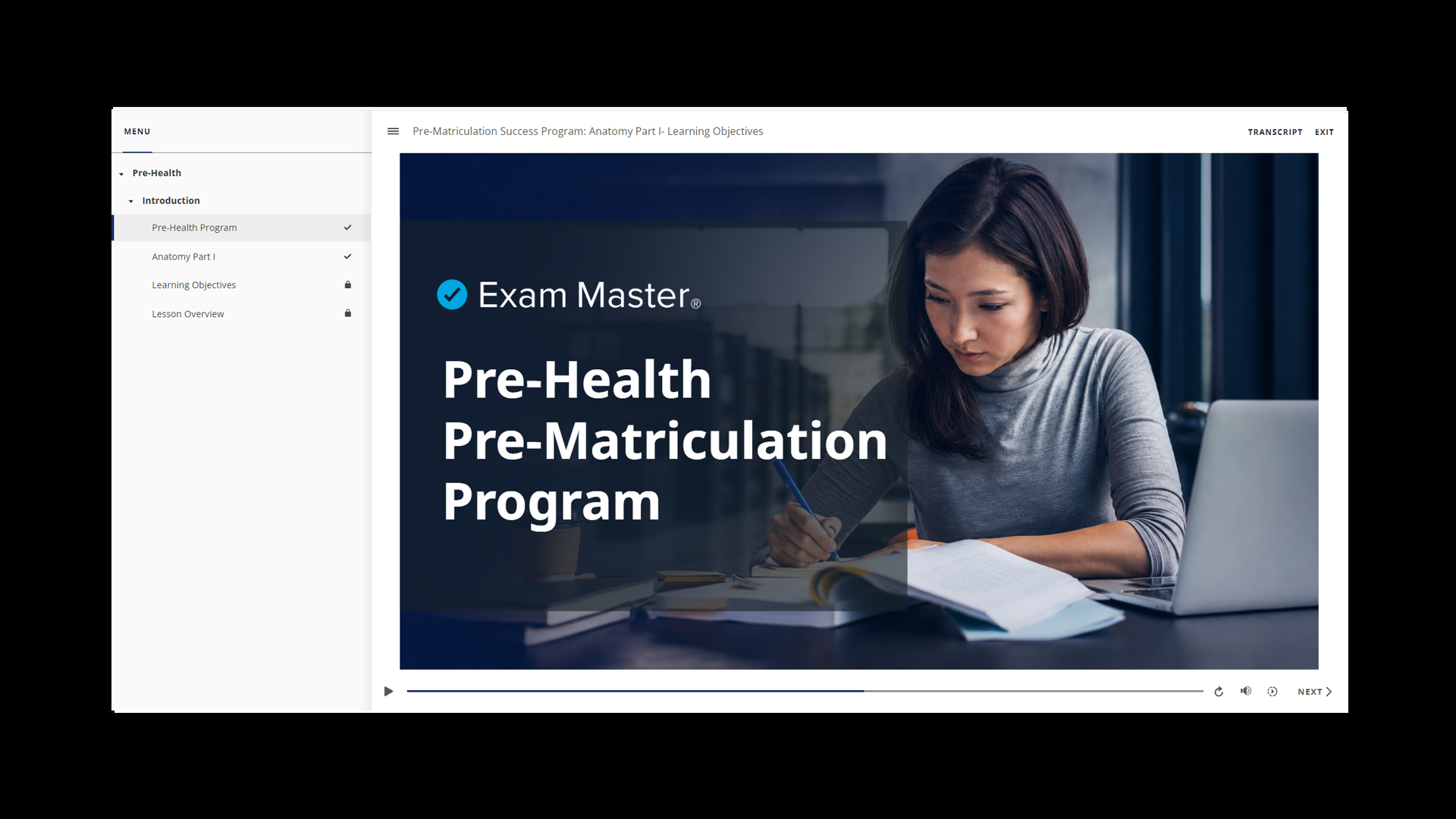
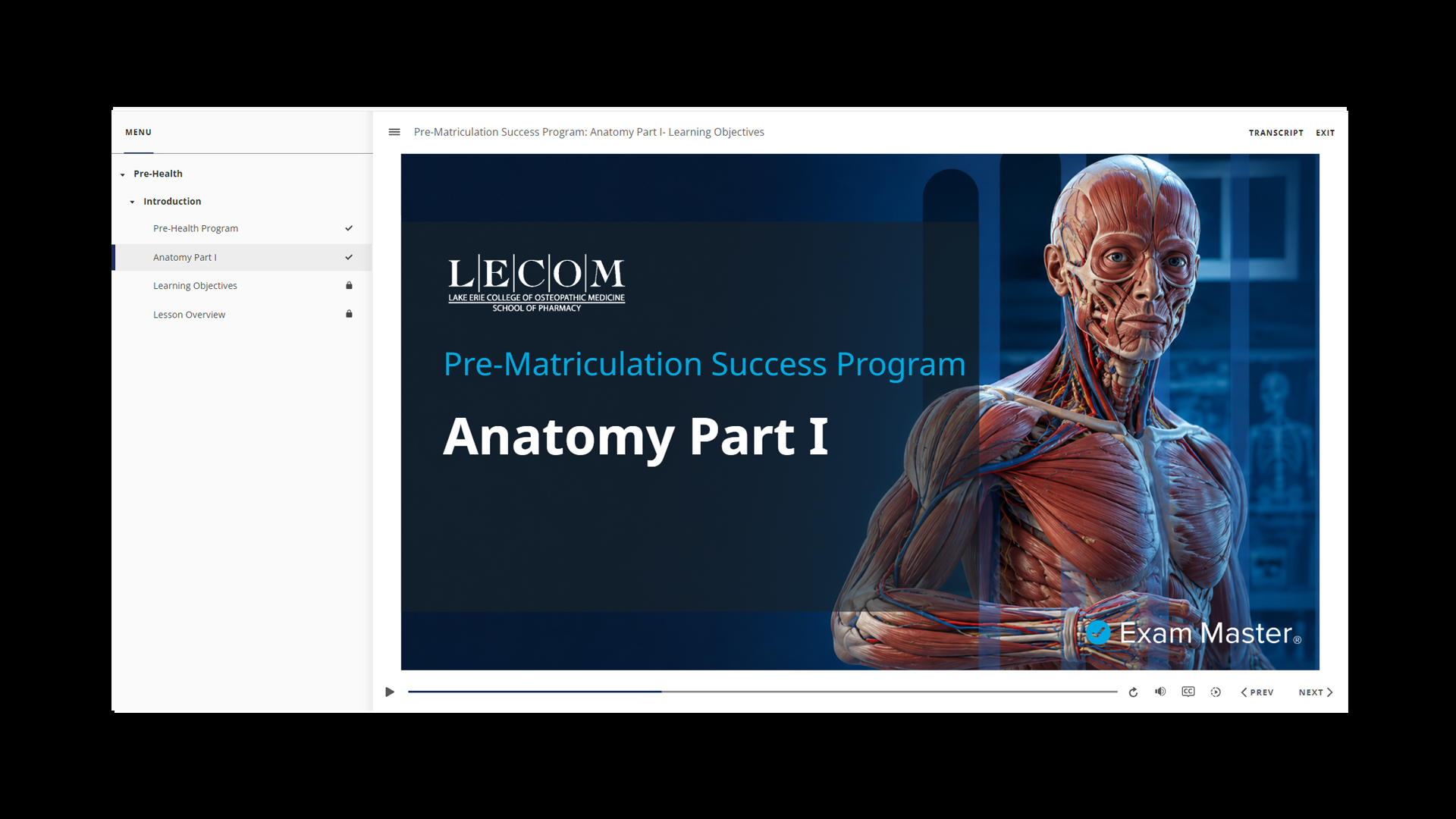
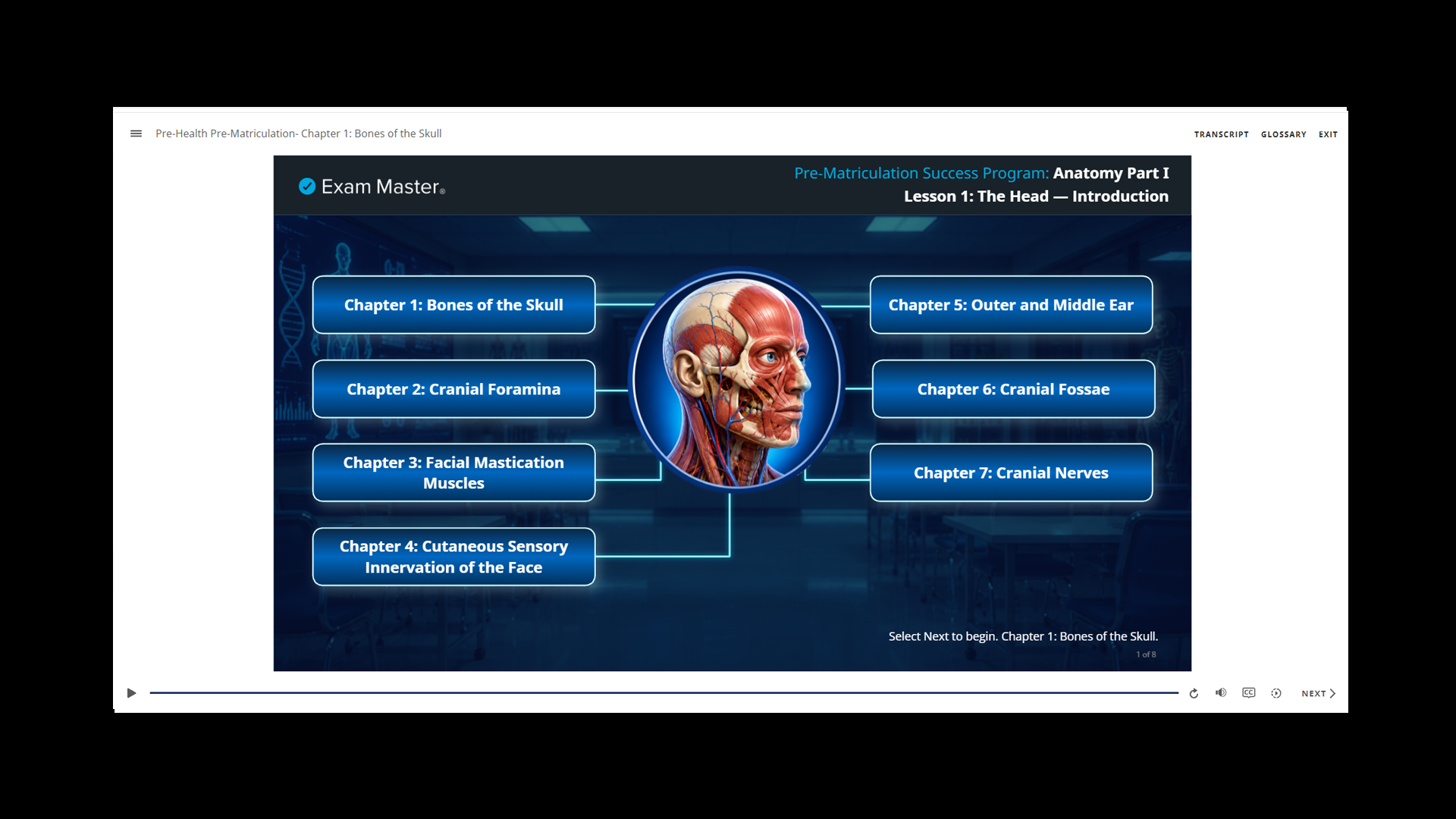
Exam Master hired me to redesign its Pre-Health and Pre-Matriculation courses in collaboration with the LECOM School of Pharmacy. These courses are designed for students entering graduate and medical-related programs and serve as a preparatory “boot camp” covering foundational subjects such as anatomy, biochemistry, physiology, and study strategies. The original courses were primarily delivered through simple PowerPoint-based lectures. As eLearning expectations continue to evolve, this format no longer provided the level of engagement, clarity, or value that modern learners expect. The goal of the redesign was to transform the courses into a more engaging, visually rich, and effective digital learning experience.
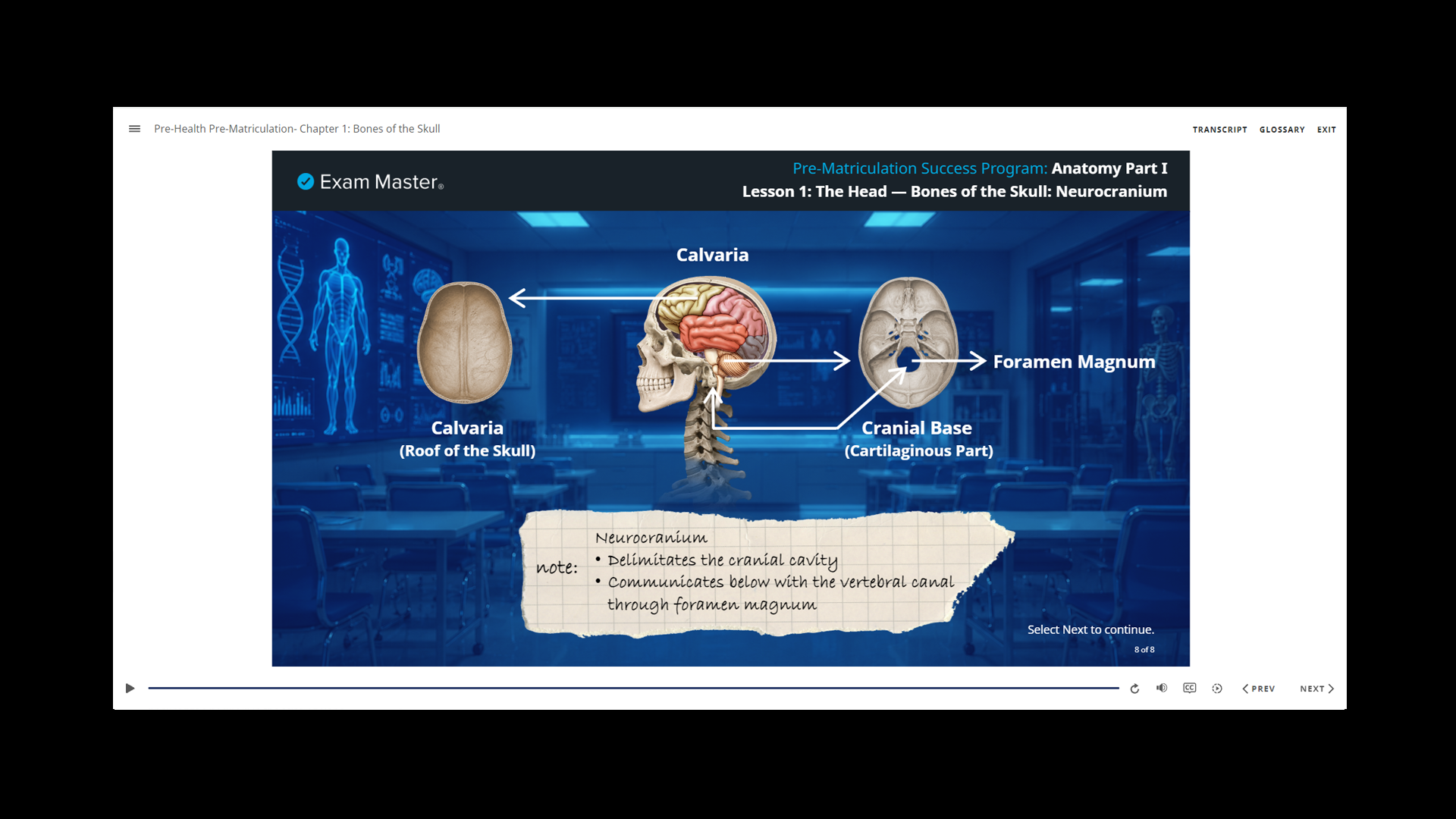
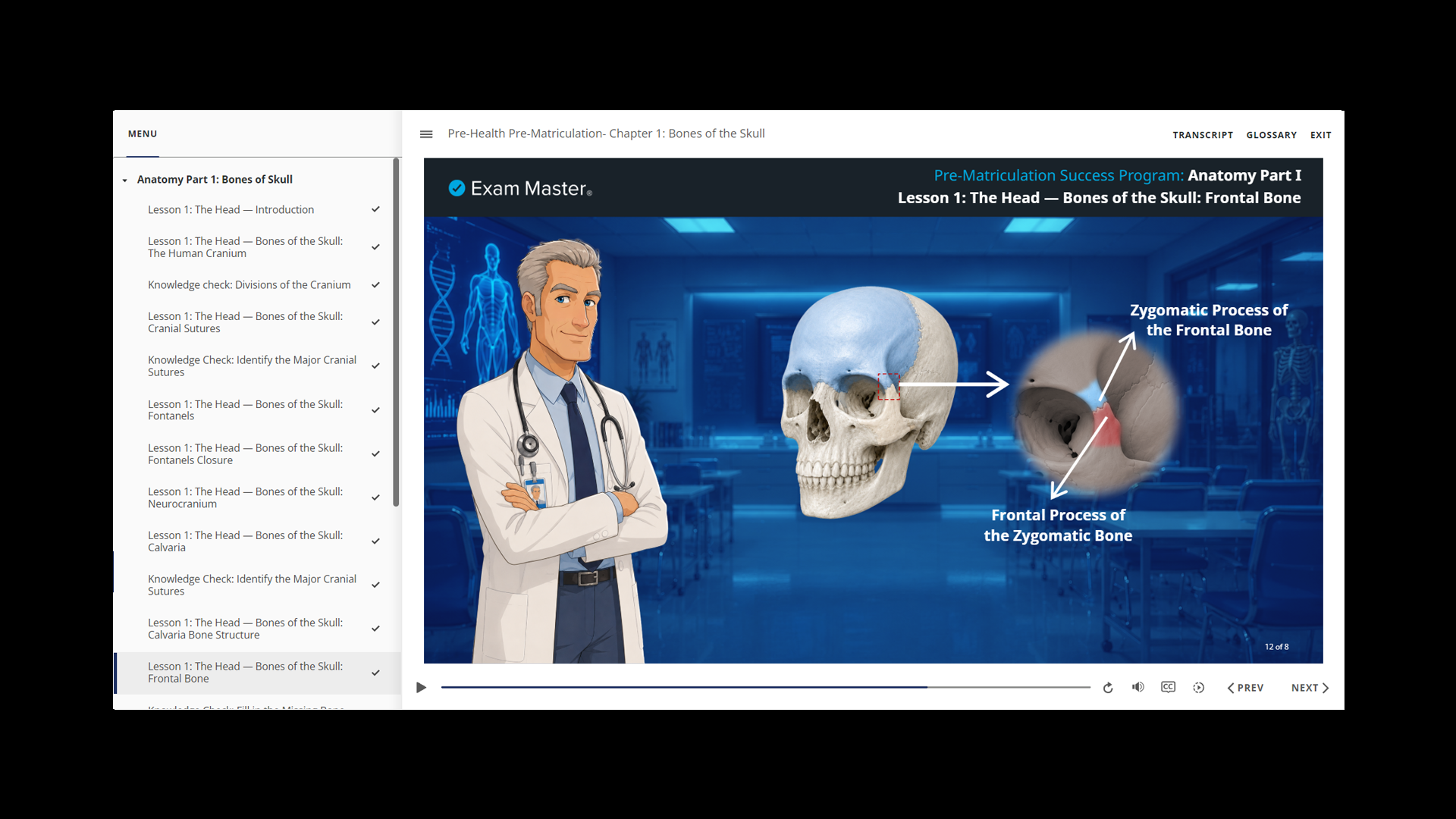
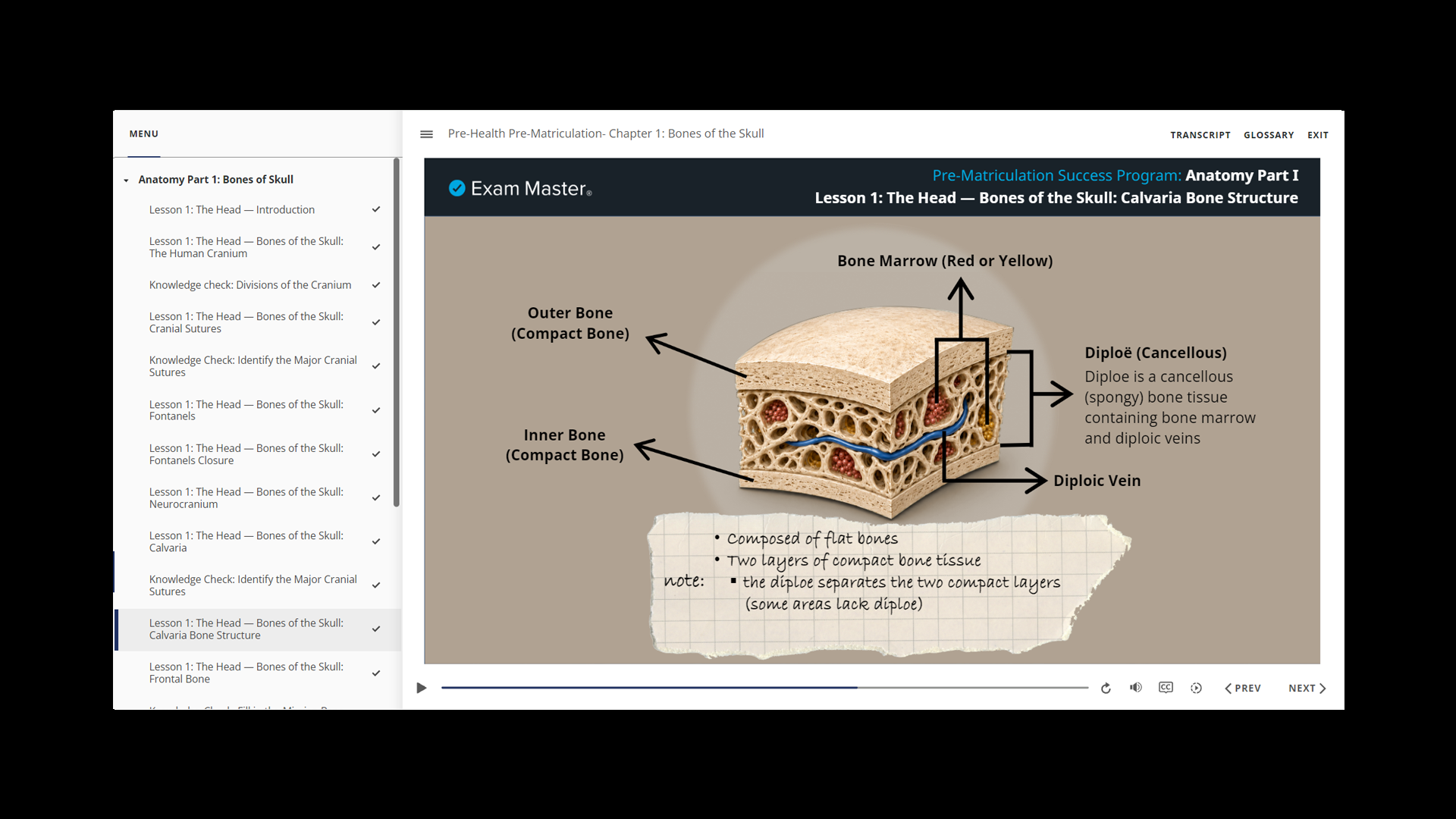
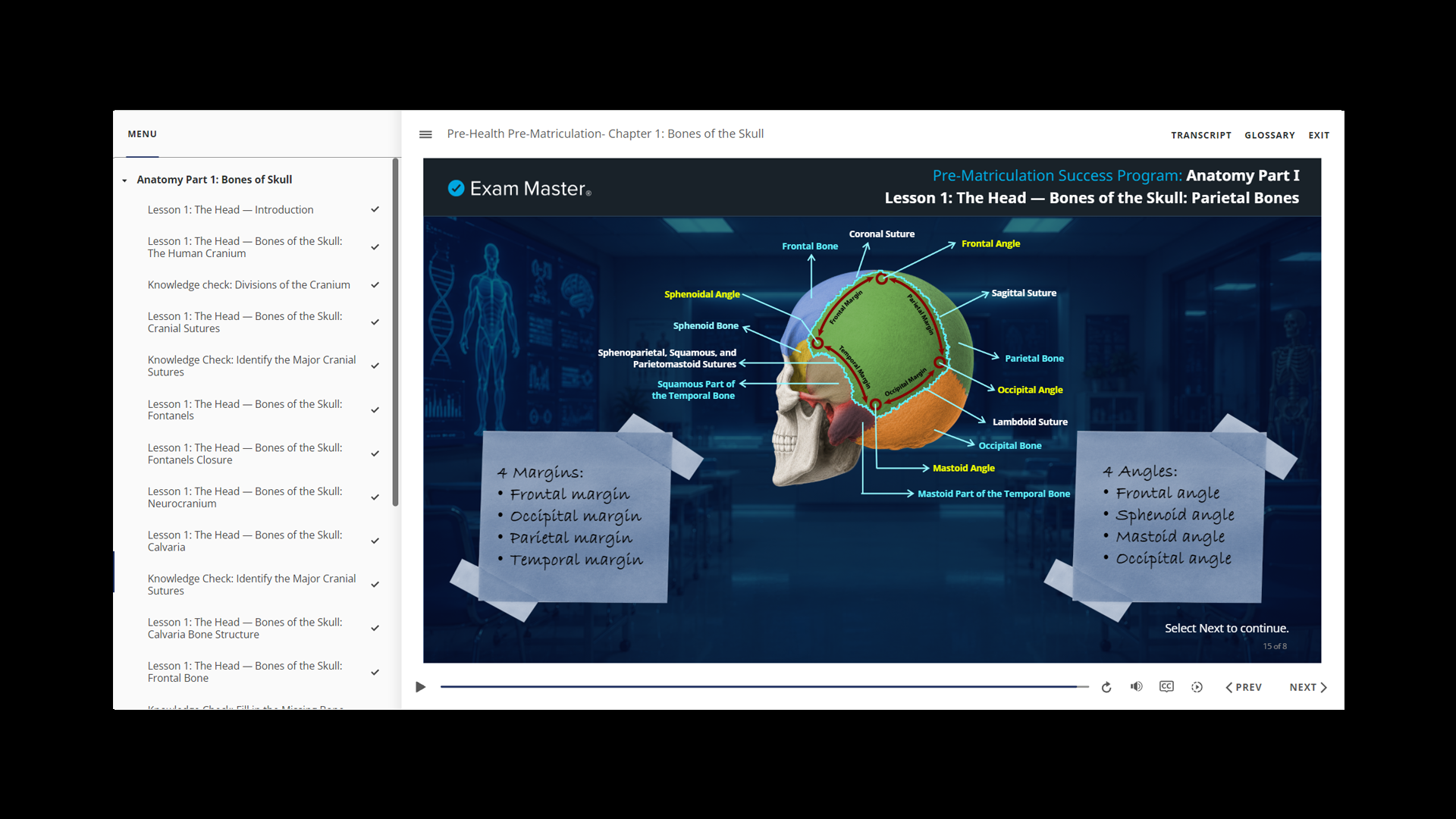
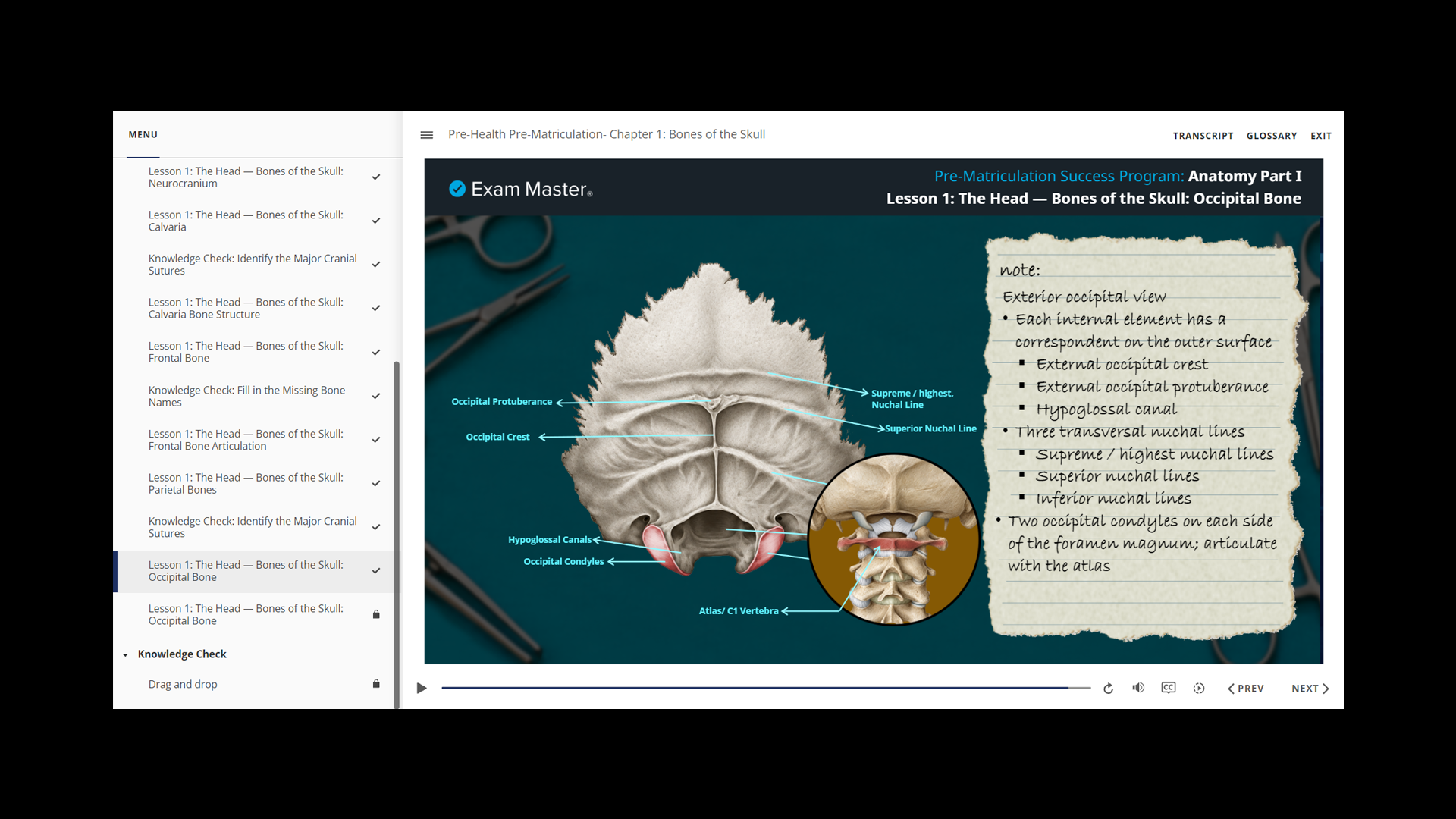
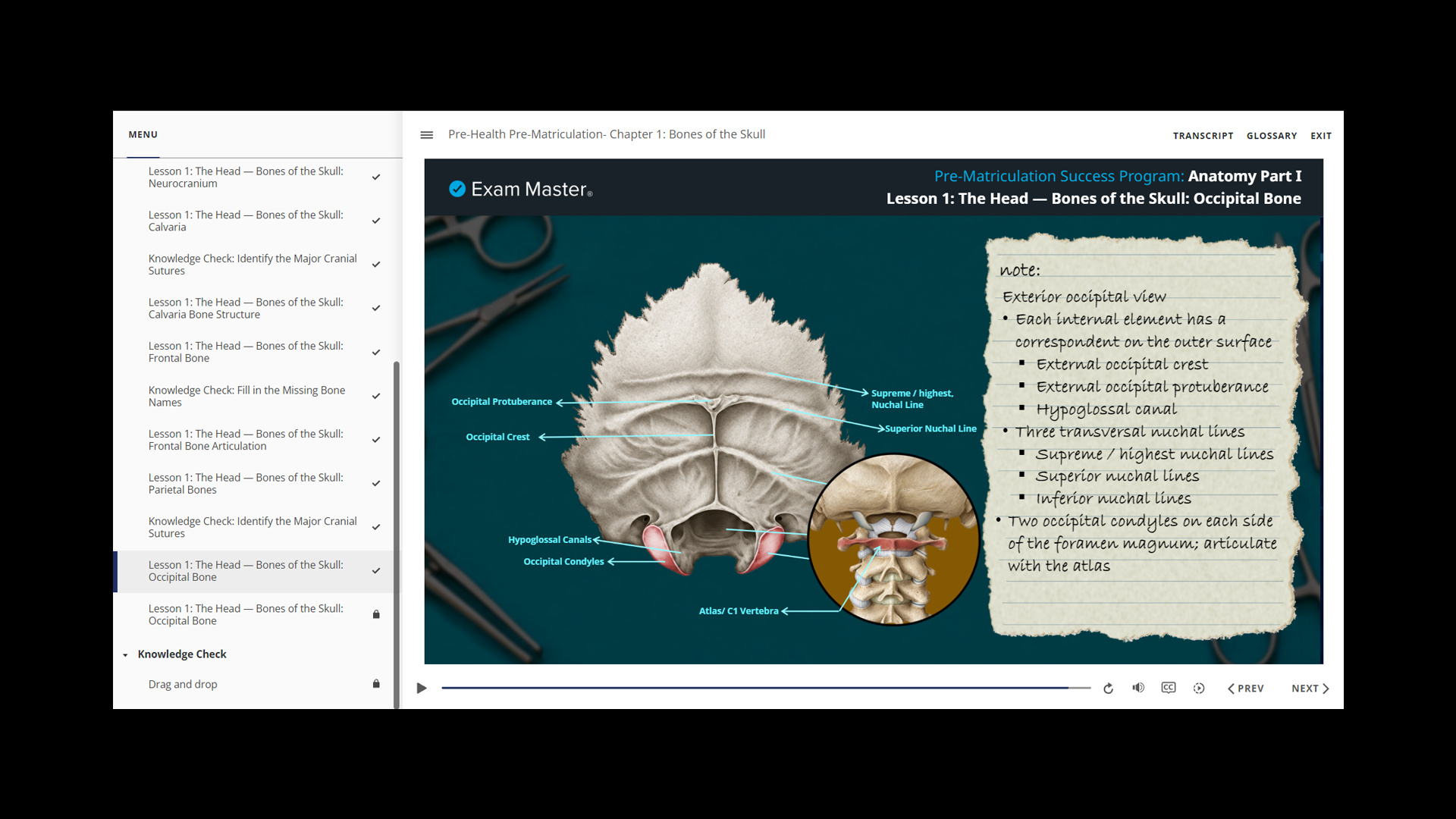
The original courses presented course instructions and learning objectives in large blocks of text, making it difficult for learners to quickly identify key information and understand what they were expected to achieve. The lack of clear visual hierarchy and structured content created unnecessary cognitive load before learners even began the lessons. The instructional content relied primarily on instructor audio narration with limited written notes and minimal visual support. When instructors introduced anatomical structures or complex medical terminology, learners lacked clear visual references to help identify and understand the concepts being discussed. As a result, students often had to search for external images and resources to connect verbal explanations with actual anatomical structures, interrupting the learning process and reducing the value of the course. The redesign addressed these challenges by simplifying and organizing course instructions and learning objectives, establishing a clearer visual hierarchy, and integrating detailed anatomical illustrations, visual highlighting, animations, and synchronized narration. These improvements aimed to make complex medical concepts easier to visualize, understand, and retain while creating a more intuitive, engaging, and effective learning experience.
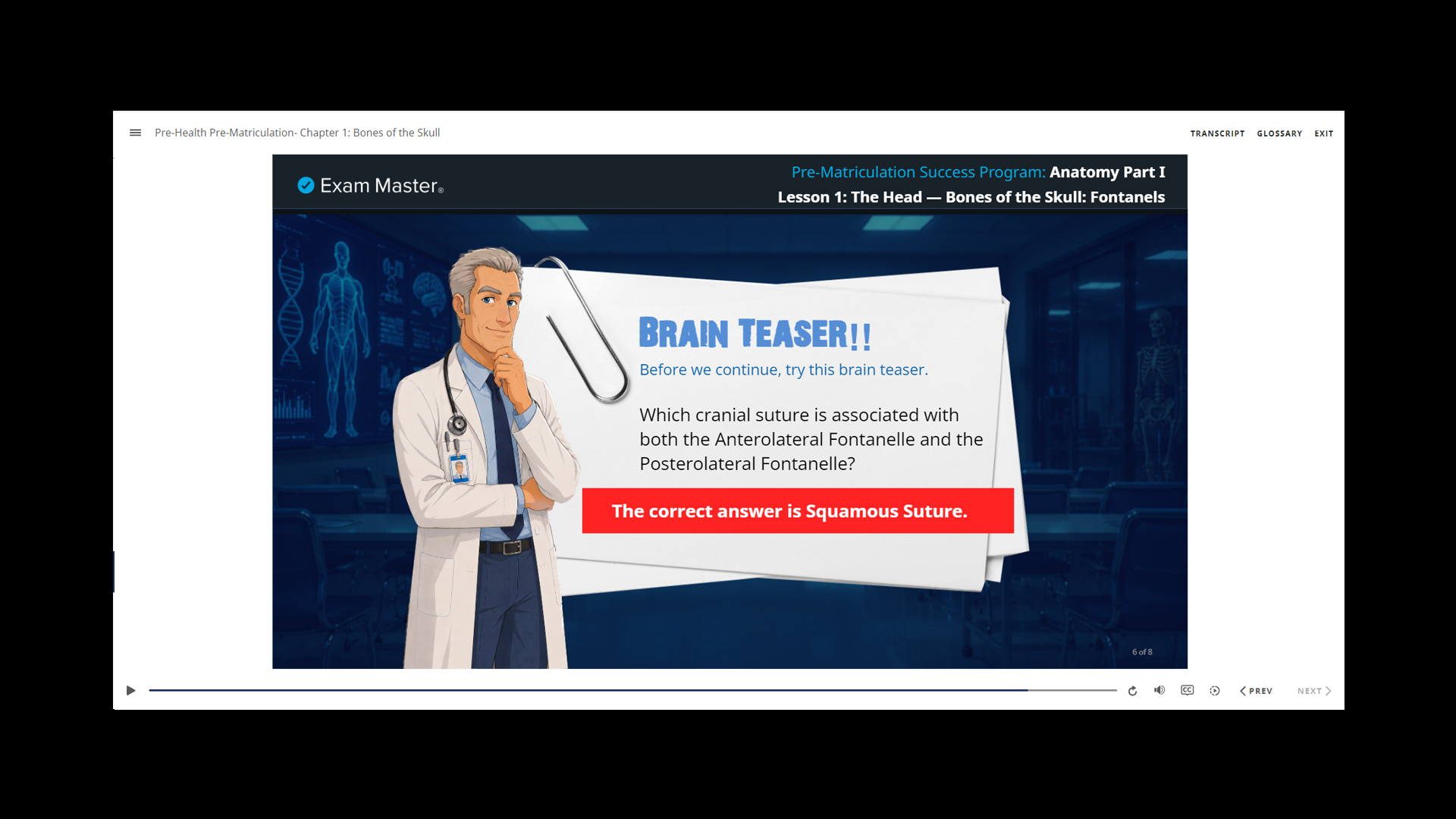
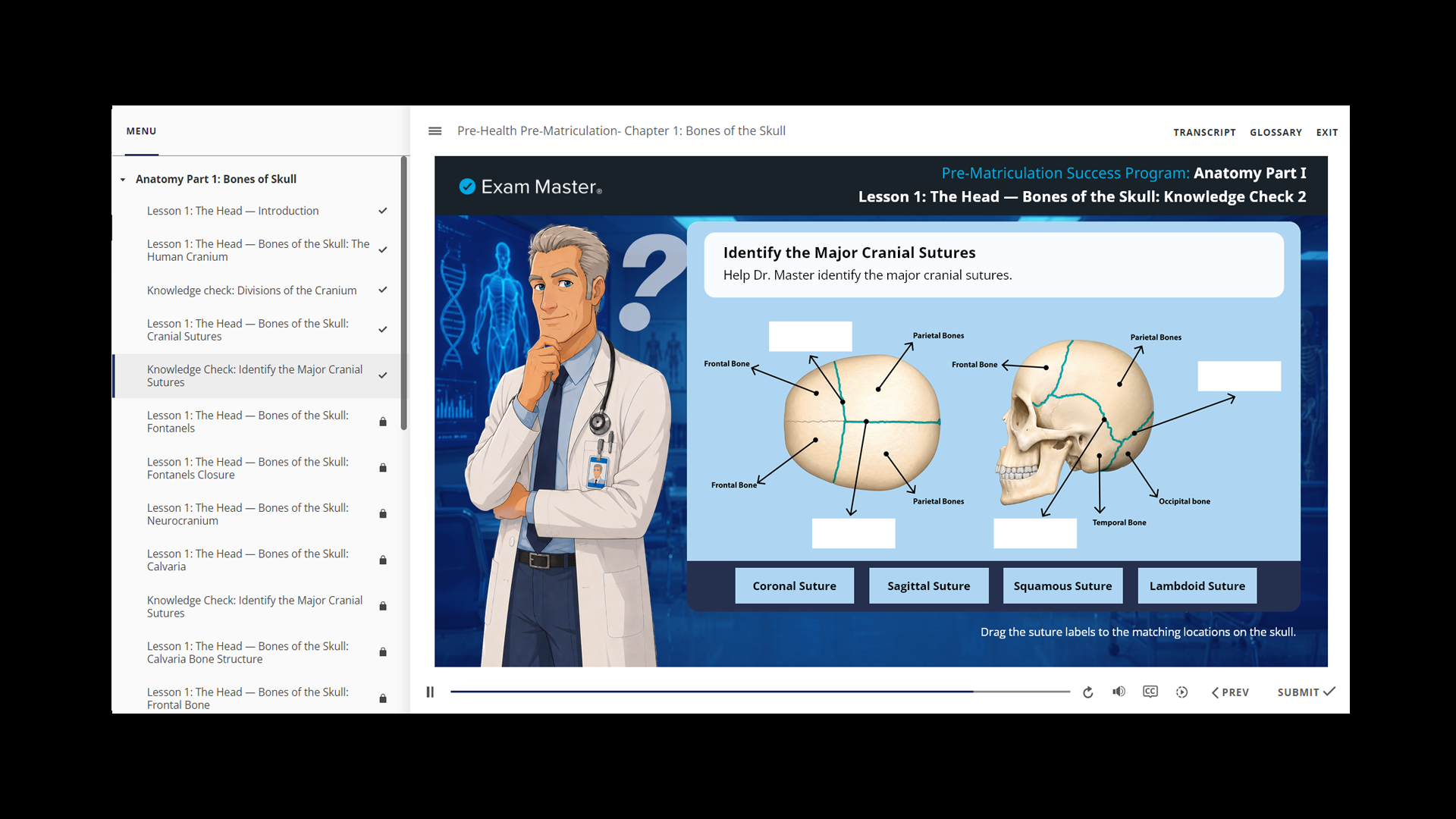
The mission of this project was to redesign the course into an interactive and visually engaging eLearning experience that would make complex content easier to understand and more enjoyable to learn. By integrating refined visuals, custom illustrations, animation, and structured instructional design, the course was transformed from a passive lecture format into a more modern learning solution designed to improve clarity, engagement, and learner confidence.
View Interactive Course: Learning Objectives
One of the biggest challenges was the lack of visual
materials in the original course. Creating accurate
anatomical illustrations required more than simply
generating images with AI tools. Each visual needed
careful research, refinement, and verification against
trusted medical and anatomical references to ensure
scientific accuracy.
Another challenge was identifying occasional
inaccuracies or unclear terminology in the original
instructor narration. These issues required additional
research and content review before I could accurately
match the visuals to the audio. This process was
particularly time-consuming when developing animations
that needed to synchronize with specific anatomical
structures and explanations.
To address these challenges, I combined AI-assisted
image generation with manual illustration, visual
editing, and research using reliable medical resources.
This approach helped create more accurate, consistent,
and instructionally effective visual content.
Instructional Designer / Multimedia & Visual Innovation / Marketing Asset Development / LMS Support
I led the course redesign from both an instructional and visual development perspective. My responsibilities included: